Quick answer
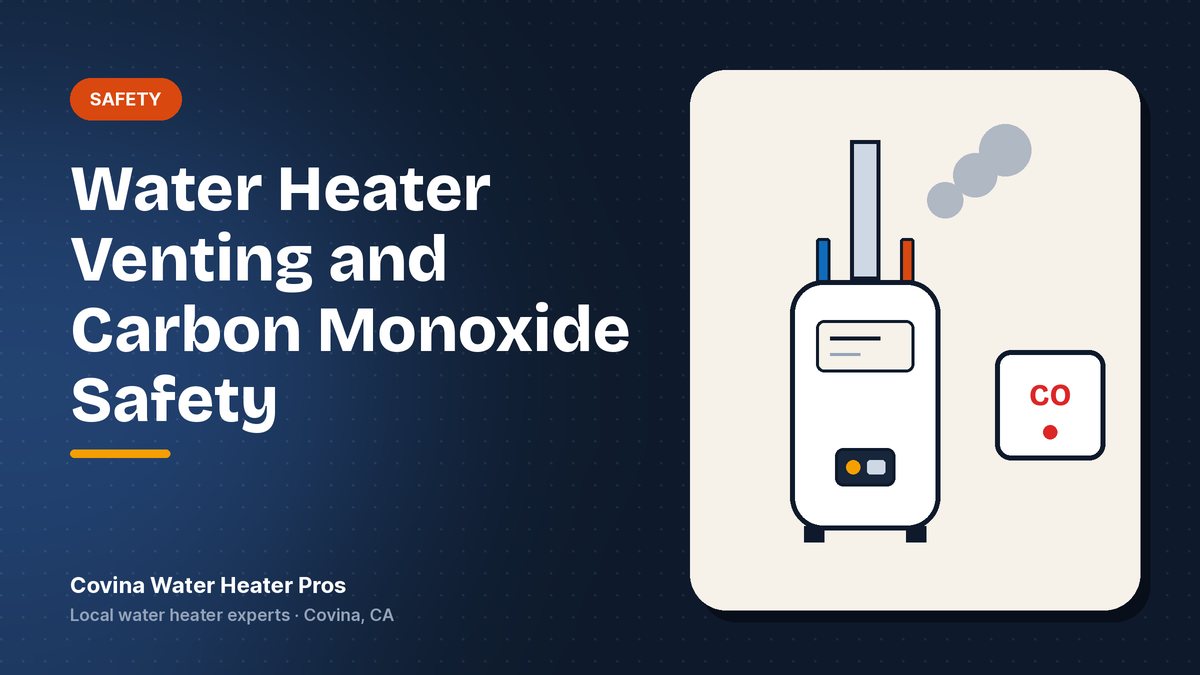
Gas water heaters produce carbon monoxide (CO) that must be vented outside. A disconnected, corroded, blocked or poorly sloped vent can allow backdrafting, sending CO into the home. Warning signs include soot near the draft hood, rust or water on the top of the tank, a yellow flame, and CO alarms. Every home with gas appliances should have working CO alarms.
Need it fixed today? Call (626) ***-****How Water Heater Venting Works
Most standard gas water heaters use a natural draft (atmospheric) vent: hot exhaust rises through a metal flue, passes through a draft hood on top of the tank, and goes up a vent pipe out the roof. Power-vent models use a fan to push exhaust through PVC or metal pipe, and tankless units use sealed vent systems.
Warning Signs of a Venting Problem
- Soot or scorch marks around the draft hood
- Rust or moisture on top of the tank
- A yellow or flickering burner flame (should be mostly blue)
- Melted plastic on the cold or hot water connections
- A vent pipe that's disconnected, sagging or sloped downward
- Headaches, nausea or dizziness that improve when you leave home
- Your CO alarm going off
Safety first: If your CO alarm sounds or anyone has symptoms of CO poisoning, get everyone outside immediately and call 911.
Worried about your water heater vent?
Talk to a local Covina technician now. Honest advice, upfront pricing.
A Simple Backdraft Test
- Close windows and exterior doors.
- Turn on exhaust fans (bathroom, kitchen) and the dryer.
- Run hot water until the burner lights.
- After a few minutes, hold a lit match or incense near the draft hood. The smoke should be pulled up into the vent.
- If smoke spills out, turn off the heater and call a professional.
Common Causes of Vent Problems
- Bird nests or debris in the vent cap
- Vent pipe knocked loose (common in garages)
- Undersized vent after replacing with a larger heater
- Sharing a vent with a furnace that wasn't sized for both
- Tight homes with powerful exhaust fans creating negative pressure
We inspect venting on every service call and correct it during replacements. If you're worried about your vent, call us. See also what to do if you smell gas.
This article is general information for Covina-area homeowners. Gas, venting and electrical work should be done by a licensed professional. For help with your specific water heater, call (626) ***-****.